 Little Wins
Autism
How can I support my autistic child’s communication?
Make room for words, gestures, pictures, and the communication your child already uses.
Quick Answer
Make room for words, gestures, pictures, and the communication your child already uses.
Notice how your child communicates
CDC describes communication supports that can include speech, signs, gestures, pictures, and electronic devices. Ask a qualified speech-language professional about your child’s individual needs. Do not assume that speaking is the only meaningful way to communicate or that limited speech means limited understanding.
Make ordinary choices accessible
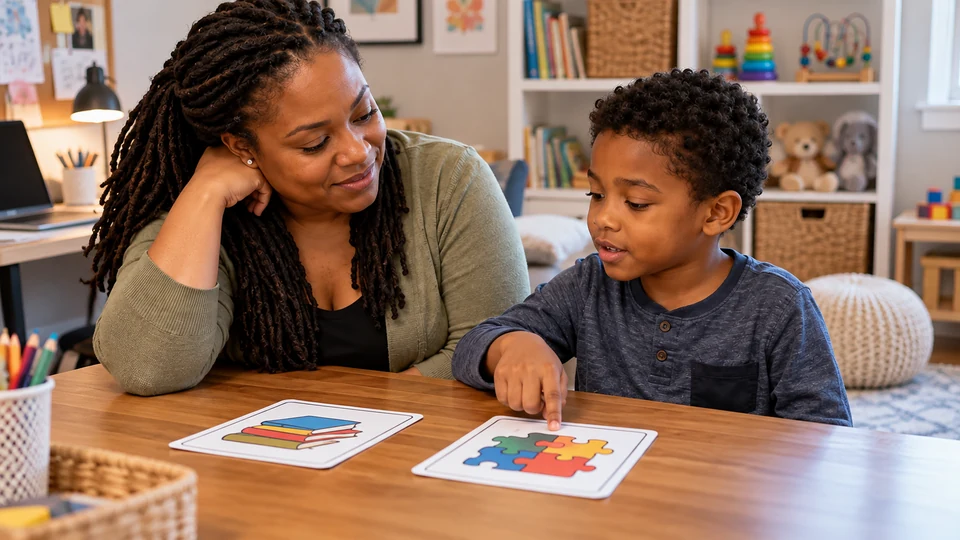
As an everyday example, show two familiar activities and let your child indicate a preference in a comfortable way. Give time for a response. Keep an existing communication device or system available; it should not be treated as a reward to earn. Ask the care team how to use supports consistently across home and school.
Respect the person behind the message
Accept a request for a break and avoid demanding eye contact to prove listening. Tell caregivers which signals or supports your child uses, with attention to privacy. Ask your child’s preferences whenever possible. Our planner can display one routine step at a time, but it is not an AAC system or a substitute for individualized communication support.
Your next little win
Choose one idea that fits today. Keep what helps, adjust what does not, and leave room for your family’s needs.
Find an Age-Based Activity · Share in the Parent ClubSources & Further Reading
Sources and resources
CDC · checked October 9, 2026.
Household examples are original editorial suggestions. General education; health content has not been independently reviewed by a clinician. Ask a qualified professional about individual health, development, or school concerns.